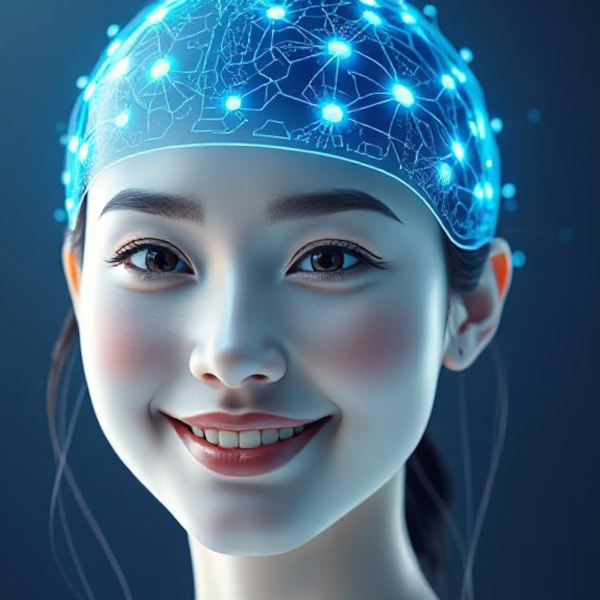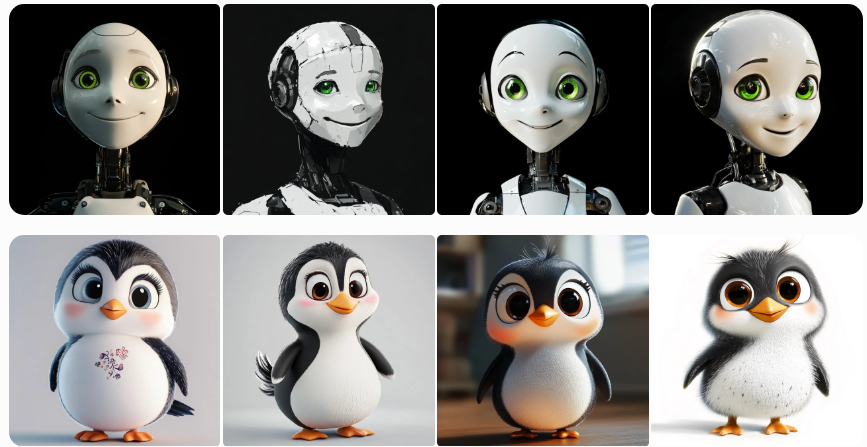
TLDR: AI is revolutionizing artistic creativity by generating images, music, videos, and illustrations based on prompts. By refining prompts and selecting specific styles—like impressionism, anime, or 3D—users can shape AI-generated artwork to match their unique vision. Beyond personal creativity, AI-assisted art streamlines content creation for work, marketing, and social media, proving that AI enhances human expression rather than replacing it.
Next Topic: AI Assisted Productivity Tools
AI-Assisted Artistic Expression: The Intersection of Creativity and Technology
Artistic expression has long been considered a uniquely human trait—a way to convey emotion, tell stories, and explore imagination. But can a computer truly create art? Just as AI has transformed writing, coding, and other digital tasks, it is now revolutionizing visual creativity. AI-driven tools can generate stunning artwork, personalized designs, and entirely new styles based on creative prompting. Through intentional guidance, users can shape AI-generated art to reflect their unique vision, proving that technology is not replacing human creativity but enhancing and expanding it in ways never before possible.
AI-assisted art extends far beyond image generation, encompassing a wide range of creative tools designed to enhance artistic expression. While AI-powered image generation remains one of the most popular applications, numerous platforms can now produce full-length songs—complete with lyrics and instrumentation—based on a single prompt. Video creation and editing tools enable users to generate animations and cinematic sequences with minimal effort, while AI-driven illustration tools assist artists in refining their digital work. These capabilities have been integrated into countless fields, from social media content creation to marketing campaigns and professional presentations. As AI continues to evolve, its role in artistic expression expands, offering new possibilities for creativity across multiple mediums
How AI Creates and Personalizes Art
So, how does AI generate art, and how can you personalize it to match your unique style? AI is trained on vast datasets containing images, videos, music, and other artistic elements. Through this training, it learns to recognize patterns, categorize different styles, and understand how various components fit together.
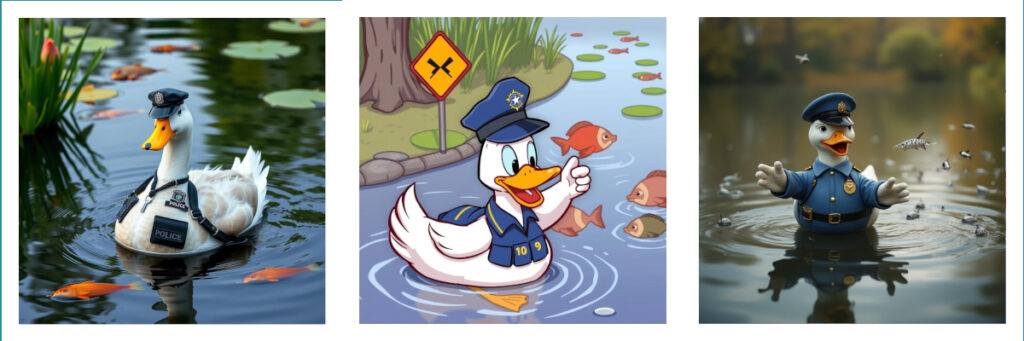
When you provide a prompt—such as “a duck in a pond wearing a police uniform directing fish traffic”—the AI constructs the image by piecing together elements from its learned data. Adding descriptive refinements, like “in a cartoonish style with bright, bold colors” or “in a photorealistic setting,” dramatically alters the final result. The more specific you are, the more tailored and unique the AI-generated artwork will be.
Let’s try it out…
Exploring AI Art Styles: Customizing Your Creations
Our police duck was rendered in three different ways, starting from the simplest of prompts. While we could have added more descriptive elements to shape the image further, one of the most impactful ways to alter AI-generated art is by choosing a specific style.
Most AI image generators offer a variety of styles, ranging from classic artistic movements to modern digital aesthetics. These options typically include well-known genres such as impressionism, anime, pop art, fantasy world, vintage, and 3D, among many others. Experimenting with different styles drastically transforms the final image, allowing users to tailor AI-generated artwork to their unique vision.
To illustrate this, let’s explore three distinct versions of our police duck: “chibi”, “cute furry creature”, and “impressionist painting.”
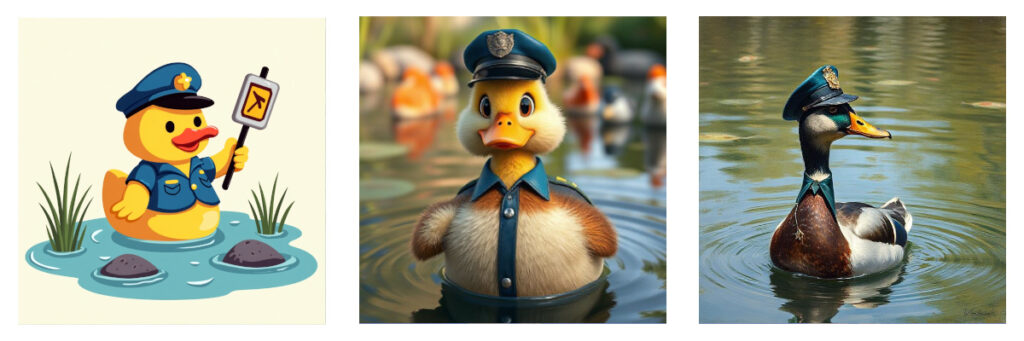
As you can see, a simple prompt can generate multiple versions of an image, but the true magic lies in what this means for creativity. We could take one of these images and craft a children’s story—perhaps about a police duck helping little lost fish find their way to school. AI-generated art isn’t just about producing visuals; it’s a tool for inspiring imagination and storytelling.
Beyond personal creativity, the most significant impact of AI-assisted art is its ability to streamline content creation for work, education, and social media. Many AI image generators now focus on adapting this technology for practical purposes, making it an essential tool for professionals and creators alike. Whether you’re using AI for business productivity, artistic inspiration, or digital content creation, its potential is truly transformative.